Classified ad platforms like findus.lk have made buying and selling easier than ever in Sri Lanka. Whether you’re looking for a used car in Colombo, a rental property in Kandy, or a second-hand phone in Galle, you can find it in minutes online.
But with that convenience comes risk. Classified ad scams in Sri Lanka have grown significantly, and thousands of people lose money every year to fraudsters operating on these platforms. The good news? Once you know how the scams work, they are surprisingly easy to spot and avoid.
This guide breaks down the most common online scams in Sri Lanka targeting classified ad users with real examples, warning signs, and practical steps to protect yourself.
What is advance payment fraud?
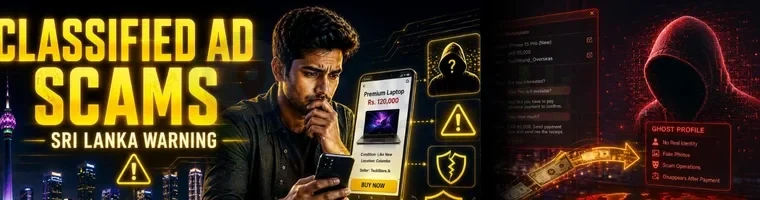
Advance payment fraud is the single most common classified ad scam in Sri Lanka. The setup is simple: a fake seller posts an attractive listing a car, a phone, furniture, or even a job offer at a price that seems too good to be true. When you contact them, they are friendly and convincing. They explain that they are overseas, relocating, or urgently need to sell. They then ask you to send a deposit or the full payment before handing over the item.
Once the money is sent, the seller disappears. The item never arrives. The listing is deleted.
How it typically plays out:
- You find a listing for a Toyota Aqua priced at LKR 3.2 million well below market rate.
- The seller says they are currently in Dubai and will ship the car once payment is confirmed.
- They send you a fake receipt or “shipping confirmation” to build trust.
- You transfer the money. They block you and vanish.
Red flags to watch for:
- Seller is based overseas or “out of the country”
- Price is significantly below market value
- They push you to pay quickly, citing another interested buyer
- They only communicate via WhatsApp and refuse a video call
- They cannot meet you in person or allow an inspection
How to avoid it: Never pay for an item you have not seen in person. For high-value purchases like vehicles, always inspect before paying a single rupee. If the deal feels rushed, it is a scam.
How the fake escrow scam works
The fake escrow scam is a more sophisticated version of advance payment fraud. Scammers use it to target cautious buyers who know better than to send money directly so they invent a fake middleman.
Here is how it works: you find a listing and express interest. The seller agrees to use an “escrow service” so that your money is held safely until you receive the item. They send you a link to what looks like a legitimate escrow website. You pay into it. The seller “confirms receipt.” But when the item never arrives and you try to get a refund, the escrow site is unreachable because it was a fake site built by the scammer.
Warning signs:
- The seller suggests the escrow service rather than you choosing one independently
- The escrow website has no verifiable contact details, reviews, or Sri Lanka-based registration
- You are pressured to release the funds quickly after “delivery confirmation”
- The site URL looks slightly off for example, findus-escrow.com instead of an official domain
How to avoid it: Real escrow services are rare in casual Sri Lankan classified transactions. If someone pushes you toward one, be very suspicious. There is no substitute for meeting in person and paying on delivery.
The overpayment trick explained
The overpayment scam targets sellers, not buyers. If you are listing something for sale a phone, a piece of furniture, a vehicle this is one to know.
A “buyer” contacts you expressing strong interest. They say they will pay via bank transfer. Shortly after, you receive a notification showing a payment larger than your asking price. They then message you in a panic “I accidentally paid too much, please refund the difference.” You send back the excess amount. Then you discover the original payment was fake, bounced, or reversed and the money you sent as a refund is gone.
How the fake payment works:
How to avoid it: Never refund a payment until it has fully cleared in your bank not just appeared. Call your bank directly to confirm the funds are real before sending anything back. Be especially cautious with cheque payments.
Other classified ad scams in Sri Lanka to know
Beyond the three main scams above, here are a few others that are increasingly common on Sri Lankan classified platforms:
Fake rental listings — Landlords ask for a deposit before you view the property. Once paid, they stop responding or the property turns out not to exist. Always view a property in person before paying any deposit.
Job scams — Listings for jobs with high salaries and minimal requirements, asking candidates to pay a “registration fee” or “training deposit” upfront. Legitimate employers never charge candidates.
Vehicle ownership fraud — A seller shows you a car and takes a deposit, but the vehicle is not actually theirs to sell. Ownership transfer issues arise weeks later. Always check the vehicle registration document (CR book) and confirm the seller’s NIC matches the registered owner.
Fake buyer interest for phishing — A “buyer” asks you to click a link to “verify your account” or “receive payment.” The link is a phishing page designed to steal your banking credentials. Never click unsolicited links from buyers or sellers.
How to stay safe on classified sites in Sri Lanka
Staying safe when buying or selling online in Sri Lanka comes down to a few firm habits:
Always meet in person. For any transaction above LKR 10,000, meet the buyer or seller face to face. Choose a public, well-lit location — a busy petrol station, a bank branch lobby, or a shopping mall entrance all work well.
Never pay before you see the item. This rule applies without exception. No matter how convincing the story, no legitimate seller requires full payment before showing you what you are buying.
Verify identity before you meet. Ask for the seller’s or buyer’s full name and NIC number. Cross-check their phone number on TrueCaller. Look them up on Facebook. A real person will not object.
Trust the platform’s built-in protections. Platforms like findus.lk flag suspicious listings and have reporting tools. Use them. If a listing looks fraudulent, report it — you may protect someone else.
Pay cash on collection where possible. For smaller transactions, cash on delivery is the safest method. For larger ones, pay only after physically receiving and inspecting the item.
Report fraud to the police. If you have been scammed, report it to the Sri Lanka Police Cyber Crime Division. Keep all screenshots, bank receipts, and messages as evidence.
Is findus.lk safe to use?
findus.lk is Sri Lanka’s most widely used classified platform and the company does invest in safety features, including listing verification and scam reporting tools. However, like any open marketplace, it cannot screen every user. The platform itself is legitimate — but individual listings can still be fraudulent.
The safest approach is to treat every listing with healthy scepticism until you have met the person and inspected the item. The platform is a tool; your judgment is the real protection.
Quick checklist before any classified transaction
Before you send money or agree to meet, run through this list:
If you answered no to any of these, slow down before proceeding.
Final thoughts
Classified ad scams in Sri Lanka are common, but they are not random — they follow predictable patterns. Advance payment fraud, fake escrow schemes, and overpayment tricks all share one thing: they create urgency and ask you to act before you can think clearly. Taking a moment to pause, verify, and insist on an in-person meeting is almost always enough to stay safe.
Share this guide with friends and family who buy and sell online. Awareness is the best protection.